
A Deep-Dive Review of the Link Between Nutrition and Mental Health
What the research suggests about food, mood, the gut, and brain health
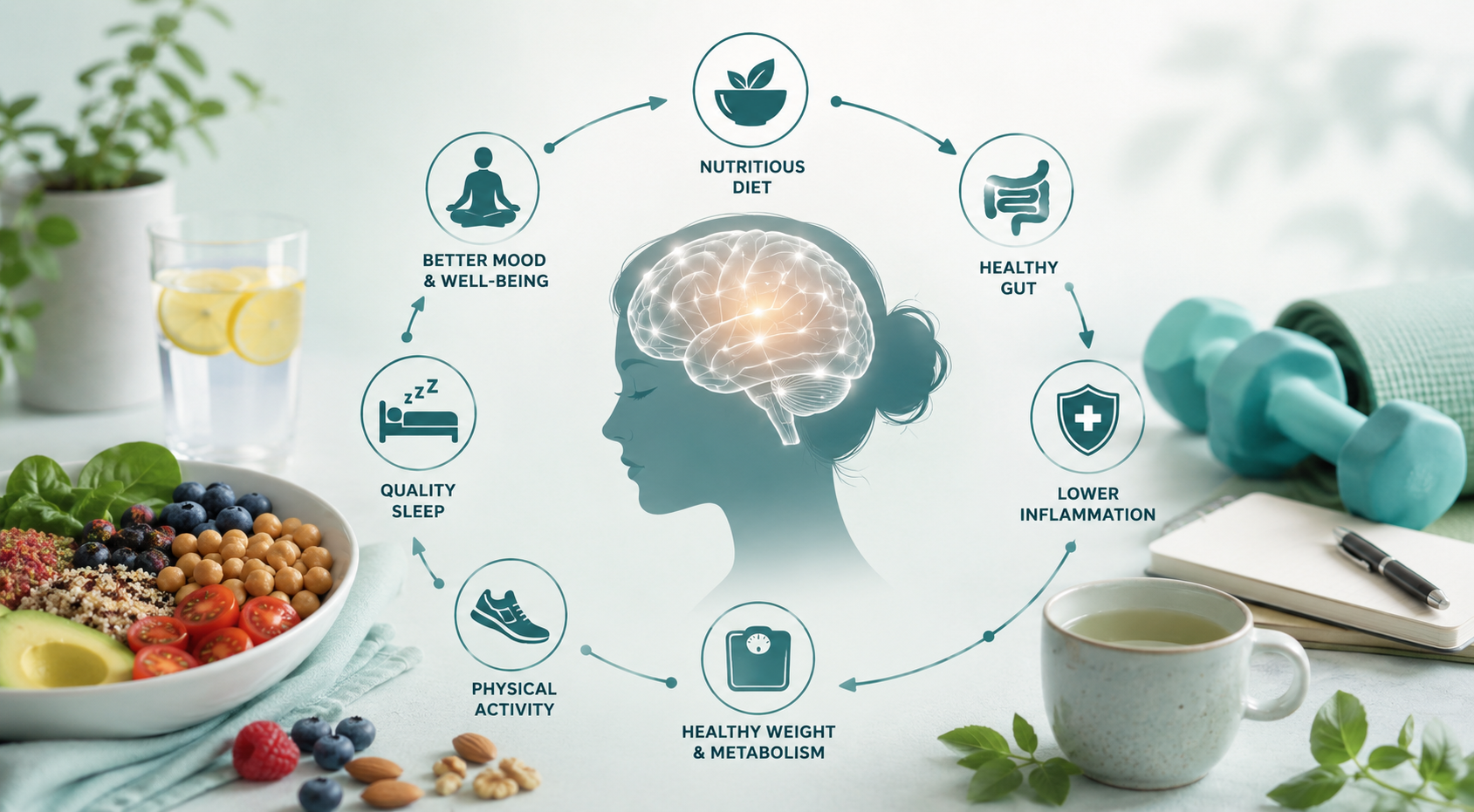
For years, nutrition and mental health were often treated as separate subjects. Diet was associated with weight, heart health, and digestion, while anxiety, depression, and other mental health conditions were approached mainly through therapy and medication.
That distinction is becoming less clear.
A growing field known as nutritional psychiatry is examining how eating patterns, nutrient deficiencies, inflammation, metabolism, and gut health may influence the brain. One large scientific review analyzed research on diet and mental health to determine which links are supported by evidence and which claims remain uncertain.
The findings do not suggest that food can replace professional mental health treatment. However, they do indicate that diet may play a meaningful supporting role in mood, cognitive health, stress response, and long-term prevention.
How the researchers reviewed the evidence
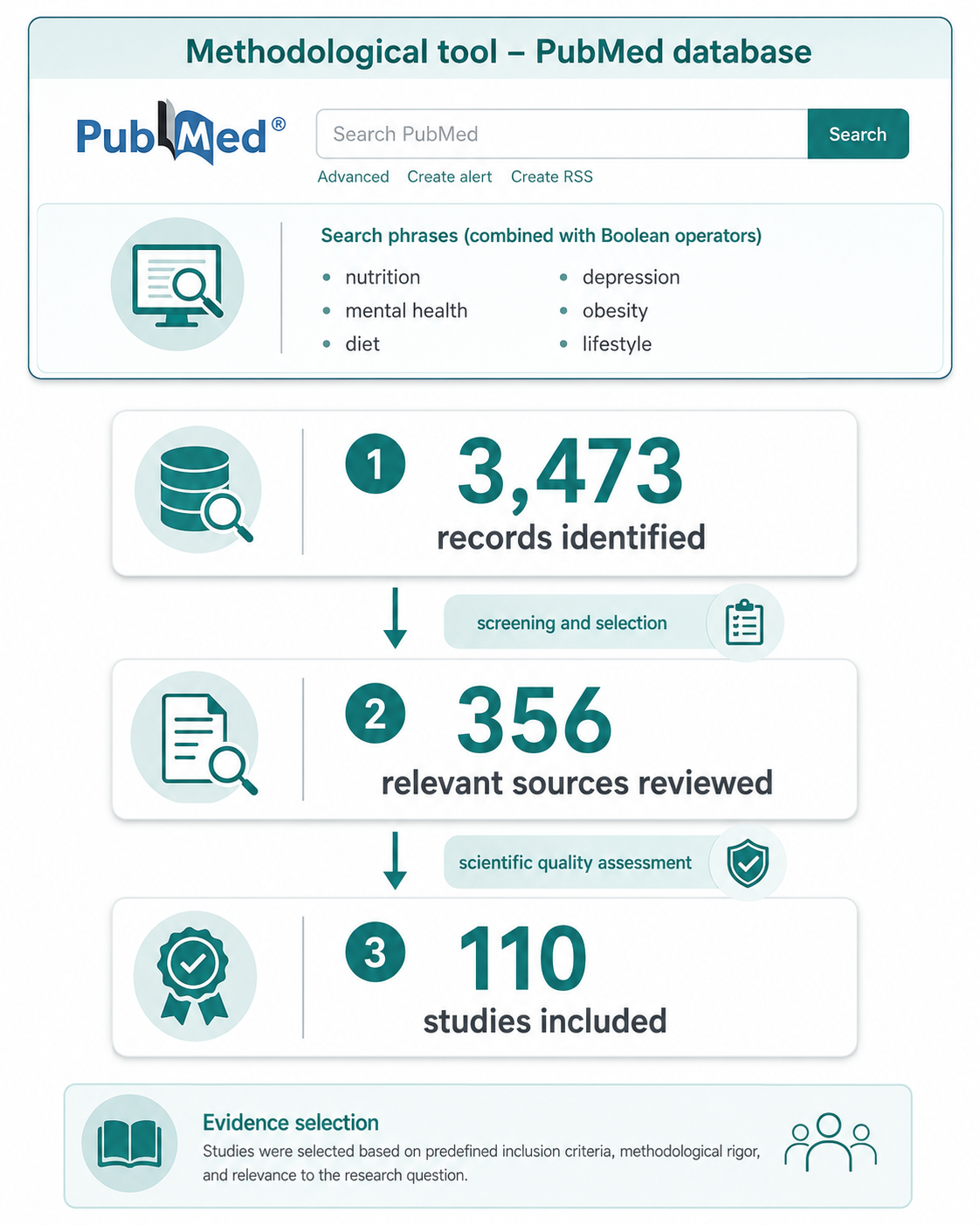
The authors searched the PubMed scientific database using terms related to diet, lifestyle, obesity, depression, mental health, and nutritional psychiatry.
The initial search returned 3,473 records. That number was narrowed to 356 relevant sources before the researchers selected 110 studies for the final review. They prioritized peer-reviewed research, newer publications, and studies considered to have stronger scientific value.
This matters because nutrition research is often complicated. People do not eat nutrients in isolation, and dietary habits are influenced by income, lifestyle, sleep, physical activity, medical conditions, and access to food.
The review therefore looked at the broader picture rather than trying to identify one "perfect" food or supplement.
Diet and mental health appear to be connected
The review found repeated associations between poorer-quality diets and worse mental health outcomes.
Modern eating patterns often include large amounts of highly processed, calorie-dense food while providing fewer nutrients that support normal nervous system function. A person may consume enough calories but still have a diet that is relatively low in fiber, vitamins, minerals, and healthy fats.
Researchers have linked lower-quality diets with factors that may affect mental well-being, including:
- Increased inflammation
- Oxidative stress
- Unstable blood sugar
- Nutrient deficiencies
- Poor gut health
- Obesity and metabolic disease
- Lower intake of fiber-rich plant foods
This does not mean that a single food causes depression or anxiety. Mental health conditions are influenced by genetics, trauma, stress, sleep, illness, social circumstances, substance use, and many other factors.
Diet is one part of a much larger system.
Why nutrients may matter to the brain
The brain requires a constant supply of nutrients to produce energy, maintain nerve cells, regulate neurotransmitters, and respond to stress.
The review discussed several nutrients that may be relevant to mental health, including:
- B vitamins
- Zinc
- Magnesium
- Vitamin D
- Omega-3 fatty acids
- Antioxidants
- Folate
- Amino acids
Deficiencies in some of these nutrients have been associated with depressive symptoms or poorer neurological function. However, an association does not automatically mean that taking a supplement will improve mental health.
A supplement may help when a genuine deficiency exists, but taking high doses without medical guidance may be ineffective or potentially harmful.
The more consistent evidence supports improving overall diet quality rather than relying on isolated pills.
The gut-brain connection
One of the most discussed areas in nutritional psychiatry is the gut-brain axis.
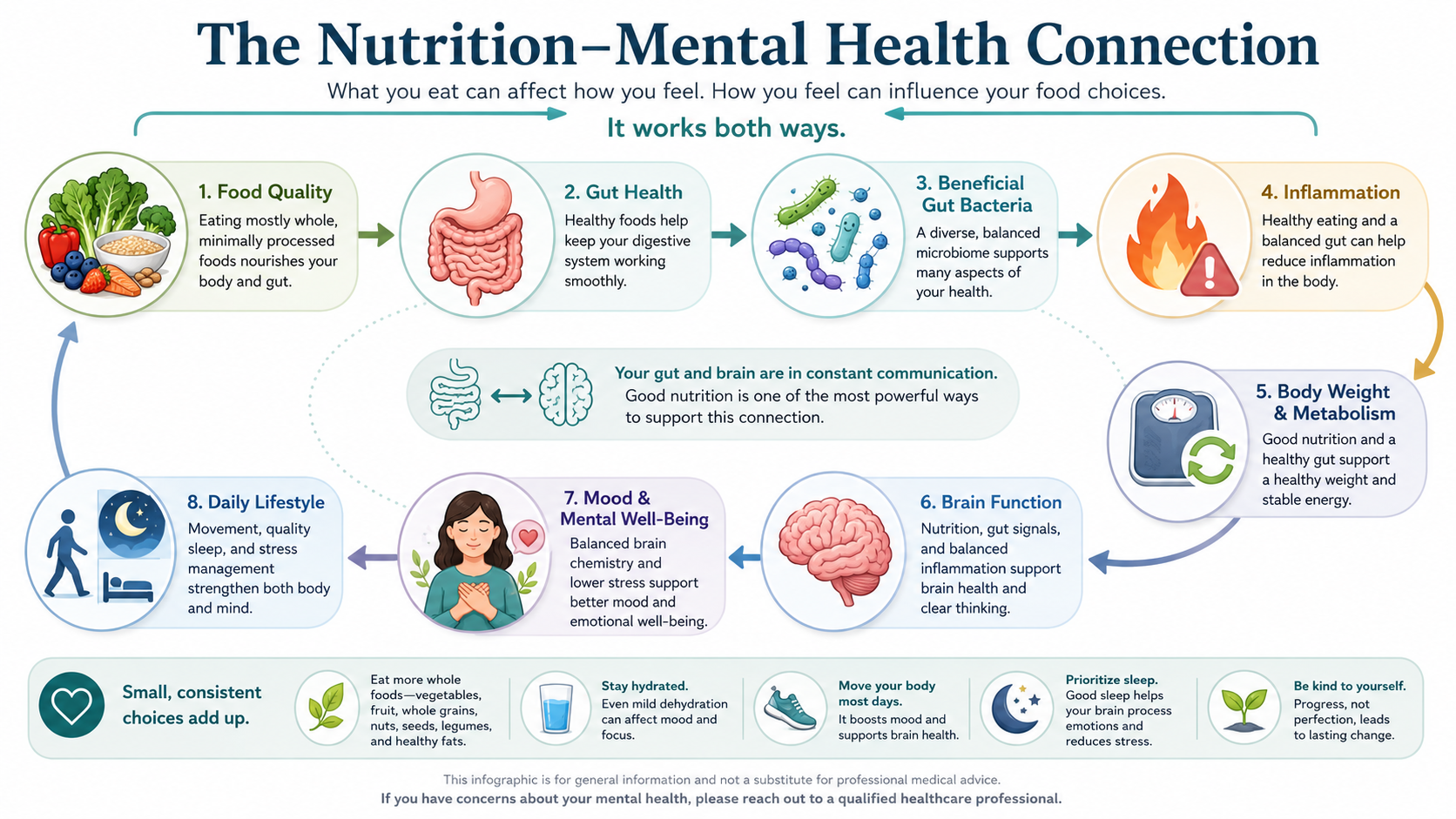
The digestive system and brain communicate through several pathways, including the nervous system, immune system, hormones, and the vagus nerve. Gut bacteria also produce compounds that may influence inflammation, stress response, and neurotransmitter activity.
This helps explain why researchers are studying probiotics, prebiotics, fermented foods, and fiber in relation to mental health.
Probiotics
Probiotics are live microorganisms that may provide health benefits when consumed in appropriate amounts.
They are found in certain fermented foods and supplements. Some studies included in the review reported improvements in stress, anxiety, digestive symptoms, or depressive scores after the use of specific probiotic strains.
However, results were not consistent across every population or condition.
The effects of probiotics may depend on:
- The exact bacterial strain
- The dose
- Duration of use
- A person's existing microbiome
- Their diet and medical history
- Whether they are using medication
This means that one probiotic product cannot be assumed to produce the same effects as another.
Prebiotics
Prebiotics are types of fiber that feed beneficial gut bacteria.
They are naturally present in foods such as onions, garlic, oats, bananas, legumes, and certain vegetables. A fiber-rich diet may help support microbial diversity and the production of compounds associated with intestinal and immune health.
Psychobiotics
The term "psychobiotic" is sometimes used for probiotic strains being studied for possible mental health benefits.
The concept is promising, but it remains an emerging area. Psychobiotics should not be viewed as a replacement for antidepressants, psychotherapy, or medical care.
Inflammation may be one possible link
Researchers are increasingly examining whether chronic inflammation contributes to depression and other psychiatric conditions.
The review noted that diets high in heavily processed foods may be associated with greater inflammatory activity, while diets rich in vegetables, fruits, whole grains, healthy fats, and other minimally processed foods may have a lower inflammatory profile.
Inflammation is not the sole cause of mental illness. Still, it may be one biological pathway through which diet and metabolic health affect the brain.
The intestinal barrier may also play a role. Stress, alcohol, certain medications, poor diet, and disruptions to the gut microbiome may influence how well the gut barrier functions.
Researchers are still working to understand how significant these mechanisms are in everyday mental healthcare.
Which eating patterns appear most promising?
The review examined several dietary approaches, including Mediterranean-style eating, the MIND diet, and ketogenic diets.
Mediterranean-style diet
The Mediterranean diet emphasizes:
- Vegetables
- Fruits
- Legumes
- Whole grains
- Nuts
- Olive oil
- Fish
- Moderate amounts of dairy and poultry
Several studies have linked Mediterranean-style eating with better mood, reduced anxiety, improved metabolic health, and healthier cognitive aging.
Some intervention trials involving people with depression reported improvements after adopting this dietary pattern. However, diet was used as part of a broader treatment approach rather than as a stand-alone cure.
MIND diet
The MIND diet combines elements of the Mediterranean and DASH diets, with additional emphasis on foods associated with brain health.
These include:
- Leafy green vegetables
- Berries
- Nuts
- Whole grains
- Beans
- Fish
- Olive oil
Research has linked stronger adherence to the MIND diet with slower cognitive decline and a lower likelihood of psychological distress in some populations.
The evidence is more developed for cognitive aging than for treating diagnosed mental health conditions.
Ketogenic diet
The ketogenic diet is very low in carbohydrates and high in fat.
It has an established medical use in certain forms of epilepsy, and researchers are investigating whether it could affect brain metabolism in other neurological or psychiatric conditions.
Early reports have described changes in mood, cognition, energy, and metabolic health. However, evidence remains limited and sometimes conflicting.
A ketogenic diet can be restrictive and may not be suitable for everyone. It should not be used for a mental health condition without supervision from qualified healthcare professionals.
Why supplements are not the simple answer
It can be tempting to reduce nutritional psychiatry to a list of supplements.
The review found that some individual nutrients have biological roles relevant to brain health, but supplementation studies have produced mixed results.
Trials involving omega-3 fats, vitamin D, folic acid, selenium, and multinutrient combinations have not consistently prevented or improved depression.
This may be because nutrients work together within complete foods and overall eating patterns.
It may also be because mental health conditions have many different causes. A nutrient supplement is unlikely to correct a problem that is primarily driven by trauma, severe sleep disruption, a medical condition, medication effects, or social stress.
What ordinary people can take from the research
The evidence does not support chasing one miracle ingredient.
A more practical approach is to improve overall eating patterns gradually.
This may include:
- Eating vegetables and fruits more regularly
- Choosing whole grains more often
- Including beans, lentils, nuts, and seeds
- Eating adequate protein
- Choosing fish or other sources of omega-3 fats
- Reducing dependence on heavily processed foods
- Eating enough fiber
- Avoiding extreme restriction
- Addressing confirmed nutrient deficiencies with professional guidance
These habits may support physical health, energy, gut health, and brain function at the same time.
Diet should support treatment, not replace it
Nutrition may be an important part of mental health care, but it should not be presented as a cure for depression, anxiety, bipolar disorder, schizophrenia, or other psychiatric conditions.
Someone experiencing persistent sadness, severe anxiety, suicidal thoughts, hallucinations, significant behavioral changes, or an inability to function should seek professional care.
Dietary improvements may be used alongside:
- Psychotherapy
- Medication
- Sleep support
- Physical activity
- Treatment of medical conditions
- Social support
- Stress-management strategies
The most responsible interpretation of the evidence is that nutrition may influence mental health, but it is rarely the only factor.
The takeaway
The connection between food and mental health is real, but it is also complex.
Higher-quality eating patterns, particularly Mediterranean-style and plant-rich diets, appear to be associated with better mental and cognitive health. Gut bacteria, inflammation, nutrient intake, and metabolic function may help explain some of these relationships.
However, researchers still need larger and more consistent clinical trials before they can create precise dietary prescriptions for specific mental health conditions. The review itself noted that current evidence remains limited by inconsistent study methods and difficulty measuring what people actually eat.
For now, the strongest message is not that one food can transform mental health.
It is that a balanced, nutrient-rich diet may help create a healthier biological foundation for the brain while working alongside established medical and psychological care.