
Ask the Expert: How to Care for Mature, Changing Skin
Board-certified dermatologist Dr. Paul A. Regan explains how aging affects the skin and shares practical ways to keep mature skin comfortable, hydrated, and protected.
How does aging affect the skin barrier?
Skin naturally becomes thinner with age as the body produces less collagen and elastin.
Oil, lipid, and natural moisturizing factor production may also decline, making it harder for the skin to hold on to water. As a result, mature skin is often drier, more fragile, and more sensitive to weather, heat, friction, and irritating products.
A weaker skin barrier may also make itching, tightness, redness, and irritation more common.
Which ingredients are best for mature skin?
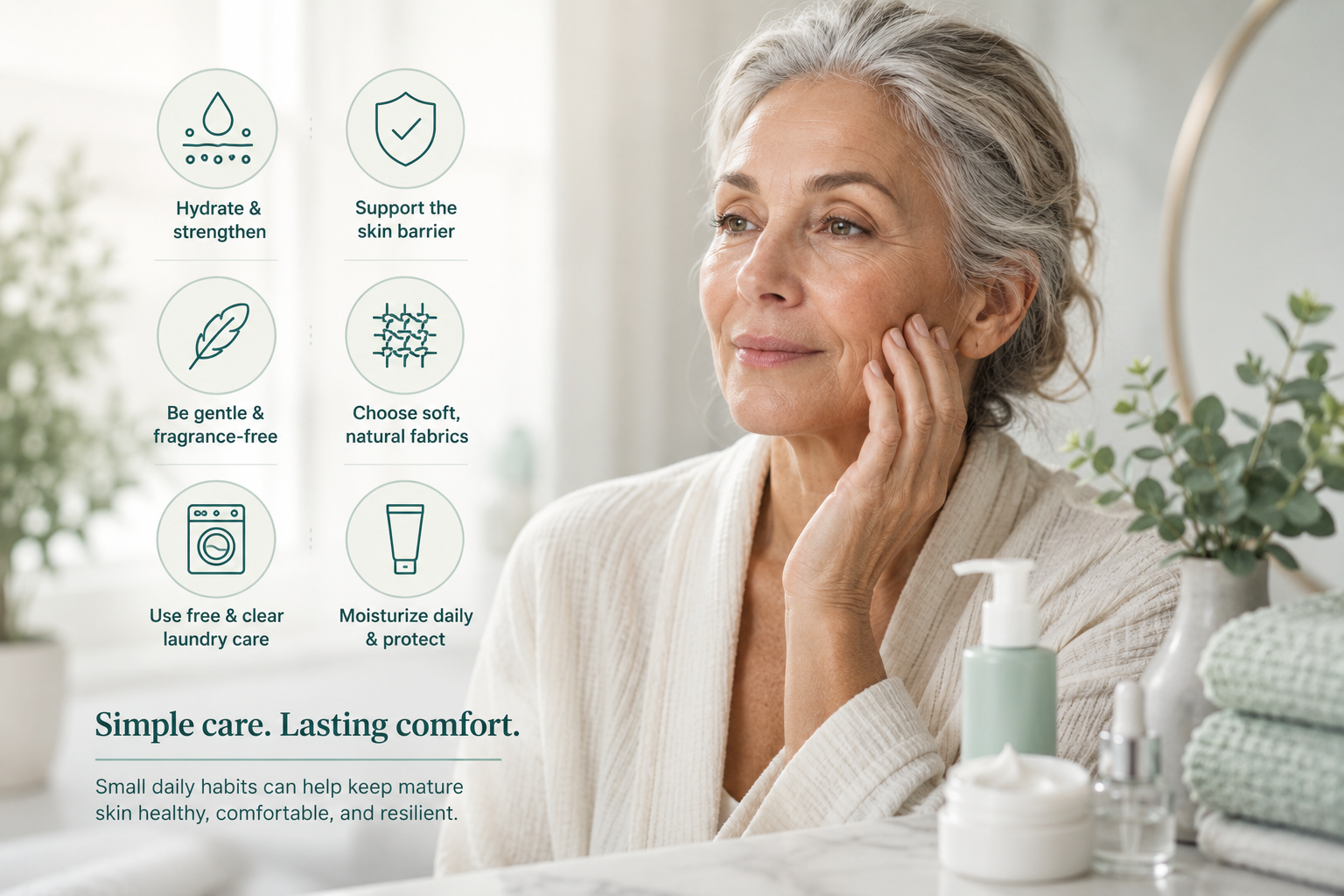
Look for products that hydrate the skin and support its protective barrier.
Helpful ingredients may include:
- Ceramides, which help replenish the skin barrier
- Hyaluronic acid, which attracts moisture
- Glycerin, which helps keep the skin hydrated
- Petrolatum, which reduces moisture loss and protects dry areas
Simple, fragrance-free creams and ointments are often better tolerated than heavily scented or complicated formulas.
Which ingredients should mature skin avoid?
Fragrances can trigger itching or irritation, particularly when the skin barrier is already weakened.
Some alcohol-based products, strong exfoliating acids, and harsh cleansers may also worsen dryness or sensitivity.
Not every mature person needs to avoid active ingredients completely, but stronger products should be introduced gradually and stopped if they cause persistent burning, peeling, redness, or discomfort.
Are some fabrics gentler on aging skin?
Soft, breathable fabrics are generally more comfortable for dry or sensitive skin.
Good options include:
- Cotton
- Silk
- Linen
- Other smooth, lightweight materials
Rough fabrics such as wool may rub against the skin and increase irritation.
Synthetic materials like polyester and nylon may trap heat and sweat, which can contribute to itching, redness, or discomfort.
Can laundry products affect mature skin?
Yes. Fragrances, dyes, and other chemicals in detergents, fabric softeners, and dryer sheets may remain on clothing and irritate sensitive skin.
Consider using a gentle, fragrance-free detergent labeled “free and clear.”
It may also help to:
- Avoid fabric softeners and scented dryer sheets
- Wash new clothes before wearing them
- Avoid using more detergent than necessary
- Rinse clothing thoroughly
- Keep the washing machine clean to prevent residue buildup
What everyday changes can help?
Mature skin care does not need to involve an elaborate routine.
Helpful daily habits include:
- Washing with a gentle, fragrance-free cleanser only when needed
- Using lukewarm rather than hot water
- Keeping showers or baths brief
- Applying moisturizer while the skin is still slightly damp
- Wearing soft, breathable clothing
- Choosing fragrance-free laundry products
- Protecting the skin from excessive sun exposure
Consistency is usually more important than using a large number of products.
How should mature skin be cleansed?
Hot water and prolonged bathing can remove protective oils and increase dryness.
Use lukewarm water and limit showers or baths to approximately 5 to 10 minutes.
Choose a mild, fragrance-free cleanser and avoid aggressively scrubbing the skin. It may not be necessary to apply soap to the entire body every day, particularly when the skin is very dry.
Focus cleansing on areas that genuinely need it.
After bathing, gently pat the skin rather than rubbing it dry.
When should moisturizer be applied?
Apply moisturizer shortly after bathing, while the skin is still slightly damp.
This helps trap water in the outer layers of the skin.
Thicker creams and ointments usually provide more protection than lightweight lotions. Fragrance-free formulas are less likely to irritate sensitive skin.
Dry areas may need moisturizer more than once per day, especially during cold weather or when indoor heating is in use.
Do mature skin routines need to be expensive?
No.
Healthy mature skin does not require a complicated collection of luxury products. A gentle cleanser, effective moisturizer, and daily sunscreen may be enough for many people.
The quality and suitability of the formula matter more than the price.
The goal is not to reverse aging, but to support the skin barrier, reduce discomfort, and protect the skin from preventable damage.
The takeaway
Aging skin often becomes thinner, drier, and more sensitive because it produces less collagen, oil, and moisture-supporting substances.
A simple routine built around gentle cleansing, lukewarm water, fragrance-free products, thick moisturizers, breathable fabrics, and careful laundry habits can make a meaningful difference.
Mature skin care does not need to be complicated. The most effective routine is often the one that protects the skin barrier and can be followed consistently.