
How Protein May Support Natural Weight Loss
Key takeaways
- Eating more protein may support weight loss by helping you feel fuller, reducing hunger, and making it easier to consume fewer calories naturally.
- Protein requires more energy to digest than carbohydrates or fat, so a higher-protein eating pattern may slightly increase the calories your body uses each day.
- During weight loss, adequate protein can help protect muscle mass, particularly when combined with resistance training.
- Protein does not override energy balance. Weight loss still requires consuming fewer calories than your body burns over time.
How protein affects appetite hormones
Your brain helps regulate hunger and food intake by responding to signals from several hormones.
Eating protein may increase hormones associated with fullness, including:
- GLP-1
- Peptide YY
- Cholecystokinin
At the same time, protein may reduce levels of ghrelin, a hormone associated with hunger.
These hormonal changes may help you feel satisfied for longer after eating. Replacing some refined carbohydrates or high-fat foods with protein may therefore reduce hunger and make portion control feel easier.
Protein uses more energy during digestion
Your body burns calories while digesting, absorbing, and processing food. This is known as the thermic effect of food.
Protein has a higher thermic effect than either carbohydrates or fat.
Estimates suggest that the body may use approximately:
- 20% to 30% of protein calories during digestion
- 5% to 10% of carbohydrate calories
- 0% to 3% of fat calories
These figures vary between individuals and studies, but the overall pattern is consistent: protein generally requires more energy to process.
This does not mean that protein calories disappear. It simply means the body uses more energy to metabolize protein than it does for other macronutrients.
Protein may slightly increase daily calorie expenditure
A higher protein intake may support resting energy expenditure through its thermic effect and its role in preserving lean muscle.
Muscle tissue requires energy to maintain. Protecting muscle during weight loss may help reduce the decline in metabolism that commonly occurs as body weight falls.
Some studies have found that high-protein diets increase daily calorie expenditure, although the size of this effect varies and is unlikely to replace the need for an overall calorie deficit.
Protein may help reduce appetite
Protein is generally more filling than carbohydrates or fat.
A protein-rich meal may keep you satisfied longer, reduce snacking, and make it easier to eat fewer calories without deliberately restricting every portion.
Some studies have found that people naturally reduce their calorie intake when protein makes up a larger proportion of their diet.
However, results differ between individuals, and adding protein on top of an already high-calorie diet may not lead to weight loss.
Can protein support weight loss without calorie counting?
Some research suggests that increasing protein intake may lead to weight loss even when people are not instructed to count calories or restrict carbohydrates.
This may happen because protein affects both sides of the energy-balance equation:
- It may reduce how many calories you naturally consume.
- It requires more energy to digest.
- It may help preserve metabolically active muscle.
Higher protein intake has also been associated with less abdominal fat and a lower likelihood of regaining lost weight in some studies.
Still, protein is not a guarantee. Portions, food quality, activity levels, sleep, medications, and overall calorie intake all affect weight management.
Protein helps protect muscle during weight loss
Weight loss usually involves losing a combination of fat, water, and lean tissue.
Ideally, most of the weight lost should come from body fat rather than muscle.
Adequate protein may help reduce muscle loss while dieting. This matters because losing muscle can lower strength, affect physical function, and contribute to a decline in daily calorie expenditure.
Resistance training provides additional protection by giving the body a reason to maintain muscle.
A weight-loss plan that combines adequate protein with strength training is generally more supportive of body composition than calorie restriction alone.
How much protein do you need?
Protein needs vary according to:
- Body size
- Age
- Activity level
- Muscle mass
- Health conditions
- Weight-loss goals
The standard daily reference intake is approximately 46 grams for many adult women and 56 grams for many adult men. These figures are designed mainly to prevent deficiency and may not reflect the ideal amount for active people or those trying to preserve muscle while losing weight.
Many weight-loss studies use protein intakes equal to approximately 25% to 35% of daily calories.
For someone consuming 2,000 calories per day, 30% from protein would equal:
- 600 calories from protein
- Approximately 150 grams of protein
That amount is not necessary or appropriate for everyone. A lower target may still provide benefits.
Protein is best distributed between meals rather than consumed mainly at one time.
People with kidney disease or another medical condition affecting protein needs should speak with a healthcare professional or registered dietitian before significantly increasing their intake.
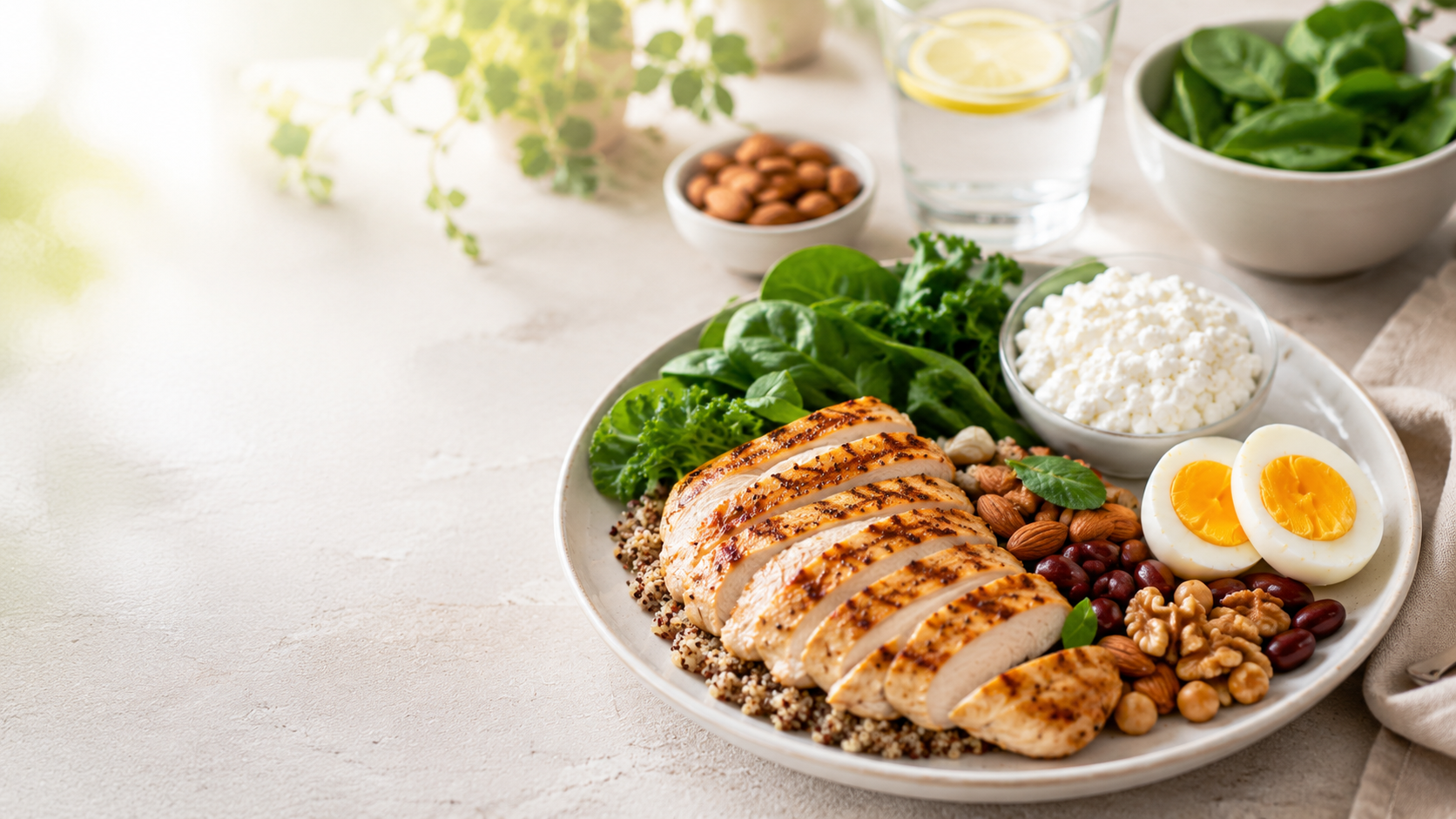
How to add more protein to your diet
Protein can come from both animal and plant foods.
Animal-based sources
- Chicken and turkey
- Fish and seafood
- Eggs
- Lean beef or pork
- Milk
- Cottage cheese
- Greek yogurt
Plant-based sources
- Lentils
- Beans
- Chickpeas
- Tofu
- Tempeh
- Edamame
- Nuts and seeds
Combining plant and lean animal proteins may help improve nutrient variety while limiting excessive saturated fat.
Protein powders can be convenient, but they are not essential. Whole foods usually provide additional nutrients, fiber, or healthy fats.
A nutrition app may help you estimate your current intake temporarily, but exact tracking is not necessary for everyone.
Frequently asked questions
How much protein should I eat for weight loss?
There is no single ideal amount for everyone.
Some studies use approximately 25% to 35% of daily calories from protein. Others base intake on body weight or lean mass.
Your target should account for your calorie needs, health, activity level, and food preferences.
Does protein help reduce belly fat?
Higher protein intake has been associated with lower levels of abdominal fat in some studies.
However, it is not possible to specifically target belly fat through one food or nutrient. Overall fat loss occurs when a consistent calorie deficit is maintained.
Can eating more protein make you lose weight?
It may help by increasing fullness, reducing hunger, slightly raising calorie expenditure, and protecting muscle.
However, weight loss is unlikely if total calorie intake consistently exceeds the amount your body uses.
Highly processed protein foods can also contain substantial calories, sodium, saturated fat, or added sugar.
The takeaway
Protein can be a useful part of a sustainable weight-loss plan.
It may help you feel fuller, naturally reduce calorie intake, slightly increase the energy used during digestion, and protect muscle while you lose fat.
The strongest approach combines adequate protein with nutrient-dense foods, regular movement, resistance training, sufficient sleep, and an appropriate calorie deficit.
Protein can make weight management easier, but it does not eliminate the importance of overall diet quality and energy balance.