
Fitness Tips That Work With a Busy Schedule
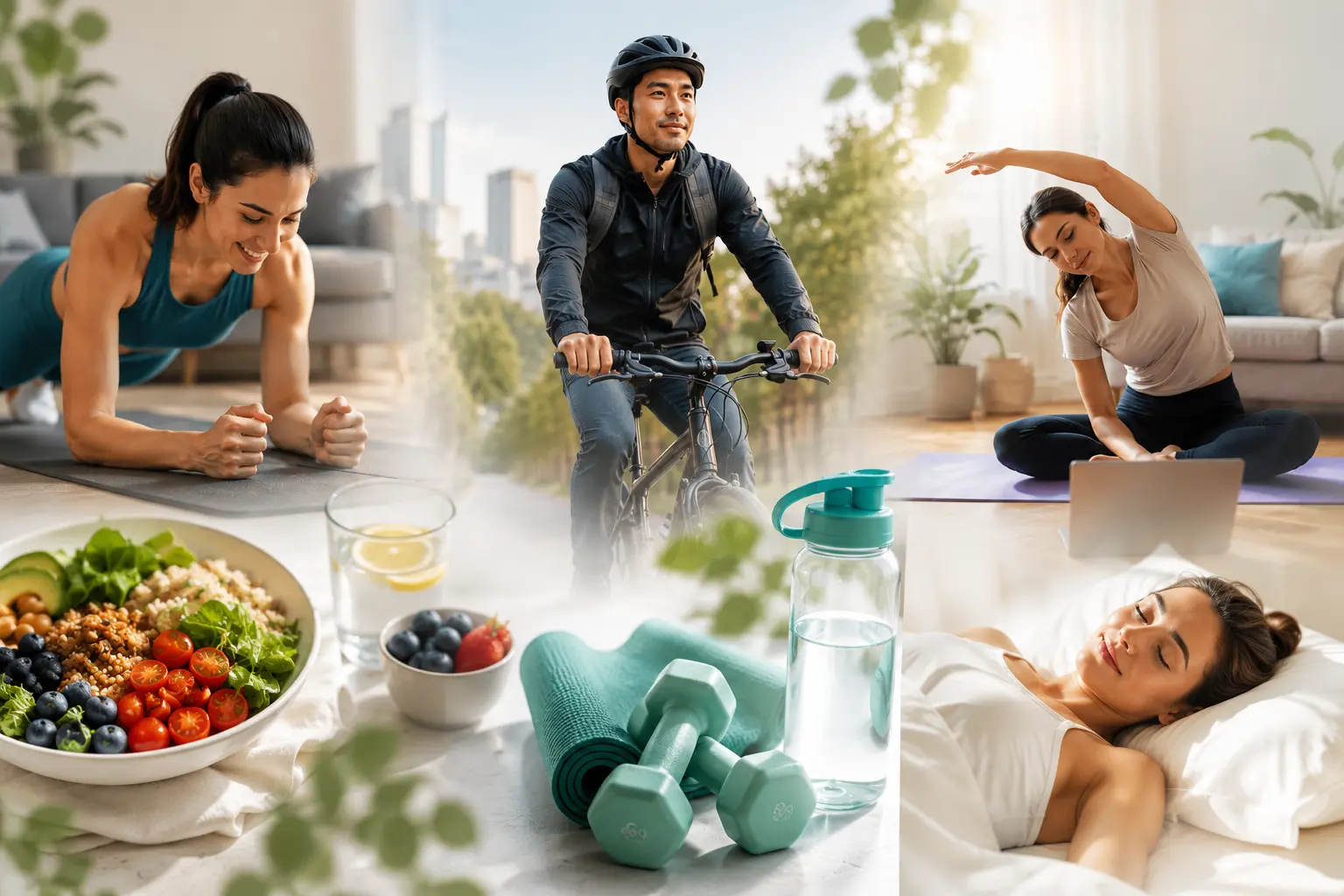
Staying physically active supports both mental and physical health, but fitting exercise into a busy routine can often seem unrealistic.
Whether you work full time, care for family members, live in a busy city, or manage an unpredictable schedule, there are still practical ways to move more. The most effective approach is choosing activities that fit naturally into your lifestyle rather than trying to follow an unrealistic fitness plan.
Here are nine ways to stay active, even when your schedule is packed.
1. Choose short, high-intensity workouts
When you do not have much time, high-intensity interval training, also known as HIIT, can provide an effective workout in a shorter period.
HIIT alternates brief periods of intense activity with short recovery intervals. These workouts may improve cardiovascular fitness and burn calories without requiring a long gym session.
Many fitness apps and online platforms offer workouts lasting 10 to 20 minutes. A large number of them require little or no equipment, making them suitable for home, work breaks, or travel.
2. Move during small breaks
Short movement breaks throughout the day can be especially helpful for people who spend many hours sitting.
Consider setting a reminder to stand, stretch, or walk every 30 to 60 minutes.
During these breaks, you might:
- Walk around your home or workplace
- Complete a few squats
- Stretch your shoulders and hips
- Walk up and down a staircase
- Perform gentle mobility exercises
Night shift workers may also benefit from short activity breaks to maintain energy and reduce stiffness or muscle tension.
Even a few minutes of movement at a time can add up over the course of the day.
3. Walk or cycle when possible
Walking and cycling are simple ways to build physical activity into everyday routines.
When possible, consider walking or biking instead of driving for short journeys, commuting, or running errands.
Cycling provides low-impact cardiovascular exercise and may be particularly useful for people who experience discomfort during high-impact activities.
Walking is also accessible to most people and does not require special equipment beyond comfortable footwear.
4. Make family time more active
Caregivers and parents may struggle to find separate time for exercise. Including family members in physical activities can help solve this problem.
Possible activities include:
- Taking a family walk
- Riding bikes together
- Playing catch
- Visiting a playground
- Dancing at home
- Hiking on weekends
These activities can help you stay active while also creating opportunities to spend meaningful time together.
Exercise does not always need to feel like a formal workout to provide benefits.
5. Use online workout classes
Online fitness classes can make exercise more convenient for people who prefer working out at home or cannot regularly attend a gym.
Classes are available in many different formats, including:
- Yoga
- Pilates
- Dance
- Strength training
- Cardio
- Mobility exercises
Many platforms provide free or affordable sessions, and video-sharing websites also offer a wide range of workouts.
Because online classes can usually be completed at any time, you can fit them into your morning, lunch break, or evening routine.
6. Build activity into your commute
Your daily commute may provide opportunities for additional movement.
Consider:
- Walking part of the journey
- Cycling to work
- Getting off public transportation one stop early
- Standing on the bus or train
- Taking stairs instead of an elevator
- Parking farther away from your destination
These small adjustments can increase your daily step count without requiring a separate exercise session.
For shift workers, light movement before or after work may also help the body transition between working hours and rest.
7. Include bodyweight strength exercises
Strength training does not always require gym machines, heavy weights, or expensive equipment.
Bodyweight exercises can be performed almost anywhere. Common examples include:
- Squats
- Lunges
- Pushups
- Planks
- Glute bridges
- Calf raises
A 10- to 15-minute routine can help maintain strength, support muscle health, and improve everyday movement.
You can complete these exercises in the morning, after work, during a break, or while traveling.
Begin with movements that match your current fitness level and gradually increase the number of repetitions or difficulty.
8. Practice mindful movement
Physical activity can also be incorporated into ordinary daily tasks.
Mindful movement means paying closer attention to how you move and hold your body throughout the day.
You might practice it by:
- Stretching while watching television
- Paying attention to posture while sitting
- Walking at a steady, intentional pace
- Taking deeper breaths while moving
- Performing gentle mobility exercises before bed
Caregivers who regularly lift or assist other people may particularly benefit from paying attention to posture and body mechanics.
Using proper movement techniques may help reduce strain and lower the risk of injury.
9. Make sleep and recovery a priority
Exercise is only one part of a healthy fitness routine. Rest and recovery are equally important.
Insufficient sleep can affect energy, motivation, exercise performance, and muscle recovery.
Most adults should aim for approximately 7 to 8 hours of sleep each night, although individual needs may vary.
Relaxation strategies may also support recovery, including:
- Gentle stretching
- Meditation
- Deep breathing
- Light walking
- Creating a consistent bedtime routine
A well-rested body may perform better during exercise and be less vulnerable to fatigue-related injuries.
The takeaway
Finding time for fitness does not require completely reorganizing your schedule.
Short workouts, walking, active commuting, family activities, online classes, and bodyweight exercises can all help you move more throughout the day.
Even 10 minutes of activity can be worthwhile. The most important goal is to choose realistic forms of movement that you can practice consistently.
Fitness should adapt to your lifestyle rather than become another source of pressure.