
12 Warning Signs You May Be Experiencing Burnout
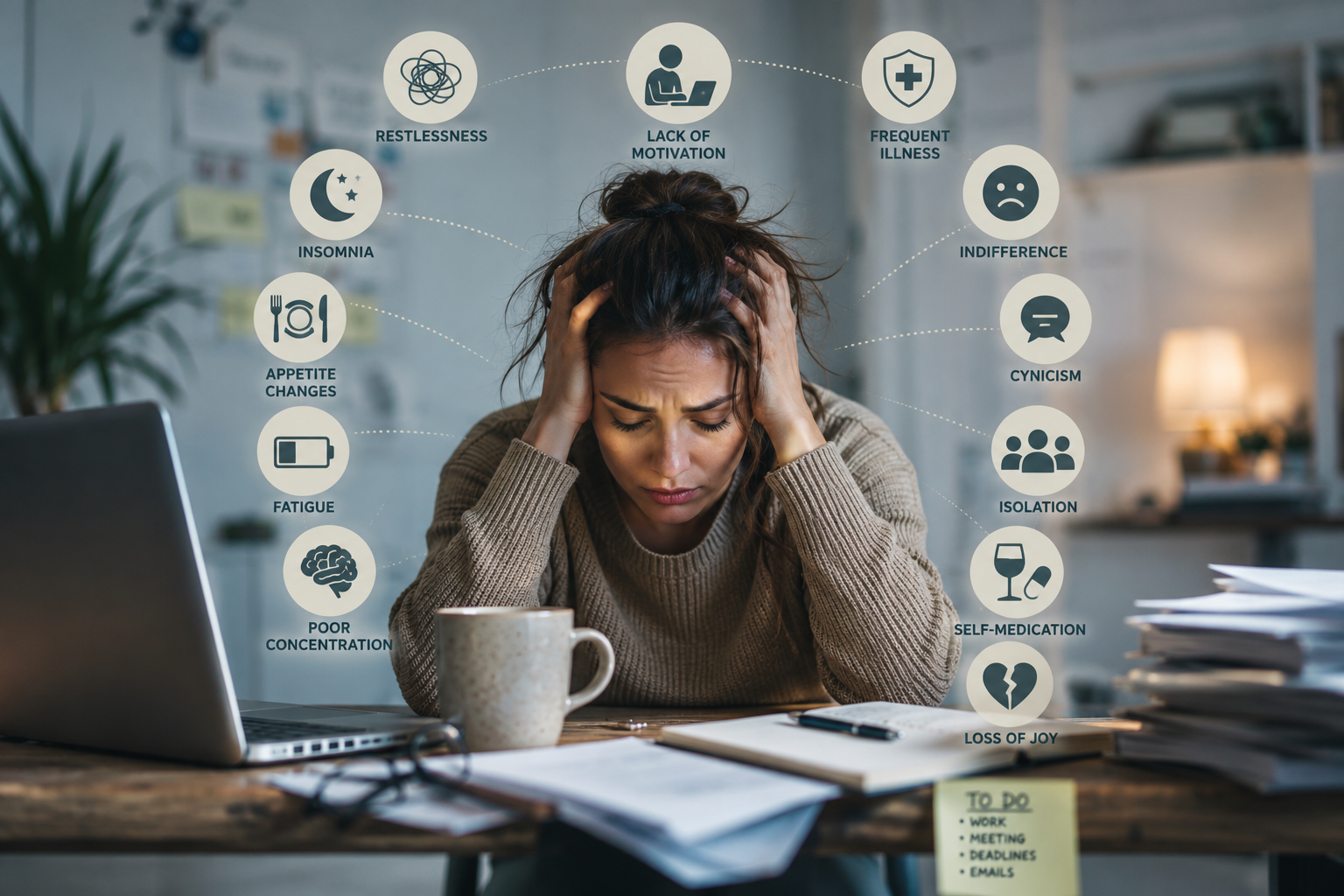
Burnout rarely appears all at once. It often develops gradually, making it easy to mistake for ordinary stress, tiredness, or a demanding period of life.
Over time, ongoing pressure can begin to affect your energy, sleep, concentration, relationships, mood, and physical health. Rest may no longer feel restorative, and responsibilities that once felt manageable may become overwhelming.
Recognizing these early warning signs can help you respond before burnout becomes more severe.
1. You cannot fully relax
Burnout may leave you feeling constantly alert or mentally busy.
You might move rapidly from one task to another without taking meaningful breaks. Even when you finally have time to rest, you may struggle to sit still, stop thinking about work, or feel genuinely calm.
This can prevent your body and mind from recovering.
2. Your sleep has changed
Persistent stress commonly disrupts sleep.
You may stay awake late trying to complete tasks, struggle to fall asleep, wake frequently during the night, or find yourself thinking about responsibilities as soon as you open your eyes.
Occasional poor sleep is common. However, repeated sleep disruption that affects your daytime functioning may require professional support.
3. Your eating habits are different
Burnout can influence appetite in several ways.
Some people lose interest in food, forget meals, or eat less than usual. Others begin eating more frequently as a way to cope with stress, even when they are not physically hungry.
Notice whether your eating patterns have changed alongside your mood or workload.
4. You have lost motivation
Tasks that once felt meaningful may begin to feel like obligations.
You may struggle to start work, avoid responsibilities, or lose interest in projects and social activities you previously enjoyed.
A persistent lack of motivation may suggest that you are emotionally depleted rather than simply having an unproductive day.
5. You seem to get sick more often
Long-term stress may affect immune function and make it harder for the body to recover.
You might notice that you catch every illness going around, remain unwell for longer than expected, or experience frequent headaches, digestive discomfort, or muscle tension.
Repeated symptoms should still be evaluated by a healthcare professional, since many medical conditions can cause similar problems.
6. You feel exhausted despite resting
Burnout-related fatigue may feel both physical and emotional.
Even after a full night of sleep, you may wake feeling drained. Everyday tasks may require more effort, and your normal exercise routine or commute may suddenly feel unusually difficult.
This exhaustion may not improve with one quiet evening or weekend off.
7. You are struggling to concentrate
You may find it harder to follow conversations, make decisions, remember details, or finish familiar tasks.
Perhaps you reread the same paragraph several times, lose track during meetings, or take much longer to complete ordinary work.
Occasional forgetfulness is normal. Persistent difficulty concentrating may indicate that your mental workload has exceeded your current capacity.
8. You feel emotionally disconnected
Burnout may create a sense of indifference toward your work, relationships, or daily responsibilities.
Tasks may no longer bring satisfaction, even when you complete them successfully. You might feel as though you are simply waiting for the day to end rather than actively participating in it.
This emotional flatness can be an important warning sign.
9. You have become more negative or irritable
Chronic stress can reduce patience and make ordinary frustrations feel much harder to tolerate.
You may become more cynical, react strongly to minor problems, or feel irritated by people who would not normally bother you.
Consider asking yourself:
- Am I becoming increasingly impatient?
- Do small setbacks feel unusually overwhelming?
- Have I reacted sharply and later wondered why?
- Do interactions leave me more drained than before?
Changes in your emotional reactions may signal that stress is building beyond a manageable level.
10. You are withdrawing from other people
Spending time alone can be healthy. However, burnout may gradually turn solitude into social withdrawal.
You might decline invitations, respond to messages less often, avoid coworkers, or feel that maintaining relationships requires more energy than you have available.
Isolation can sometimes provide temporary relief, but prolonged withdrawal may also reduce access to support when you need it most.
11. You are relying on substances to switch off
Some people begin using alcohol, cannabis, nicotine, or other substances more often when they feel overwhelmed.
It may become concerning when a substance feels like the main way to relax, sleep, manage emotions, or transition out of work mode.
Warning signs may include:
- Finding it difficult to reduce your use
- Needing larger amounts to get the same effect
- Feeling uncomfortable when you do not use it
- Thinking frequently about when you can use it again
- Continuing despite negative consequences
A healthcare or mental health professional can provide confidential support.
12. You no longer enjoy your favorite activities
Burnout may reduce interest in hobbies, relationships, entertainment, exercise, or other activities that once felt rewarding.
Going out with friends, watching a favorite film, or spending time on a hobby may begin to feel pointless or exhausting.
Loss of enjoyment can also be a sign of depression. Burnout is usually connected to prolonged demands or overload, while depression may affect nearly every area of life without one clear cause.
The two can also occur together.
Why burnout can be difficult to recognize
Early burnout symptoms often resemble normal reactions to a busy life.
Feeling tired, distracted, irritable, or less motivated may initially seem temporary. Because the changes develop slowly, people may adapt to them and continue functioning without realizing how much their well-being has declined.
Burnout becomes easier to miss when overwork is treated as normal or when taking breaks creates guilt.
A useful question is not simply whether you feel stressed, but whether the stress is persistent, spreading into multiple areas of your life, and no longer improving with ordinary rest.
How to begin recovering from burnout
Recovery usually requires reducing ongoing demands while creating more opportunities for rest and support.
It is rarely solved by one dramatic change. Smaller, consistent adjustments may gradually restore energy and a sense of control.
Helpful steps may include:
- Taking brief, intentional breaks during the day
- Creating clearer boundaries around work hours
- Establishing a defined stopping time when possible
- Protecting time for sleep and regular meals
- Staying hydrated
- Reducing unnecessary responsibilities
- Spending time outside or doing gentle movement
- Practicing breathing or grounding exercises
- Talking honestly with someone you trust
- Seeking support from a therapist or healthcare professional
If your environment remains unchanged, self-care alone may not be enough. Recovery may also require changes to workload, expectations, staffing, caregiving responsibilities, or other sources of chronic pressure.
The takeaway
Experiencing one or two of these signs occasionally does not necessarily mean you are burned out.
However, when several symptoms appear together, continue for weeks, or interfere with work, relationships, sleep, and daily functioning, your stress may no longer be manageable in its current form.
Burnout develops through gradual depletion. Recognizing the pattern early can help you make meaningful changes before exhaustion and detachment become more severe.